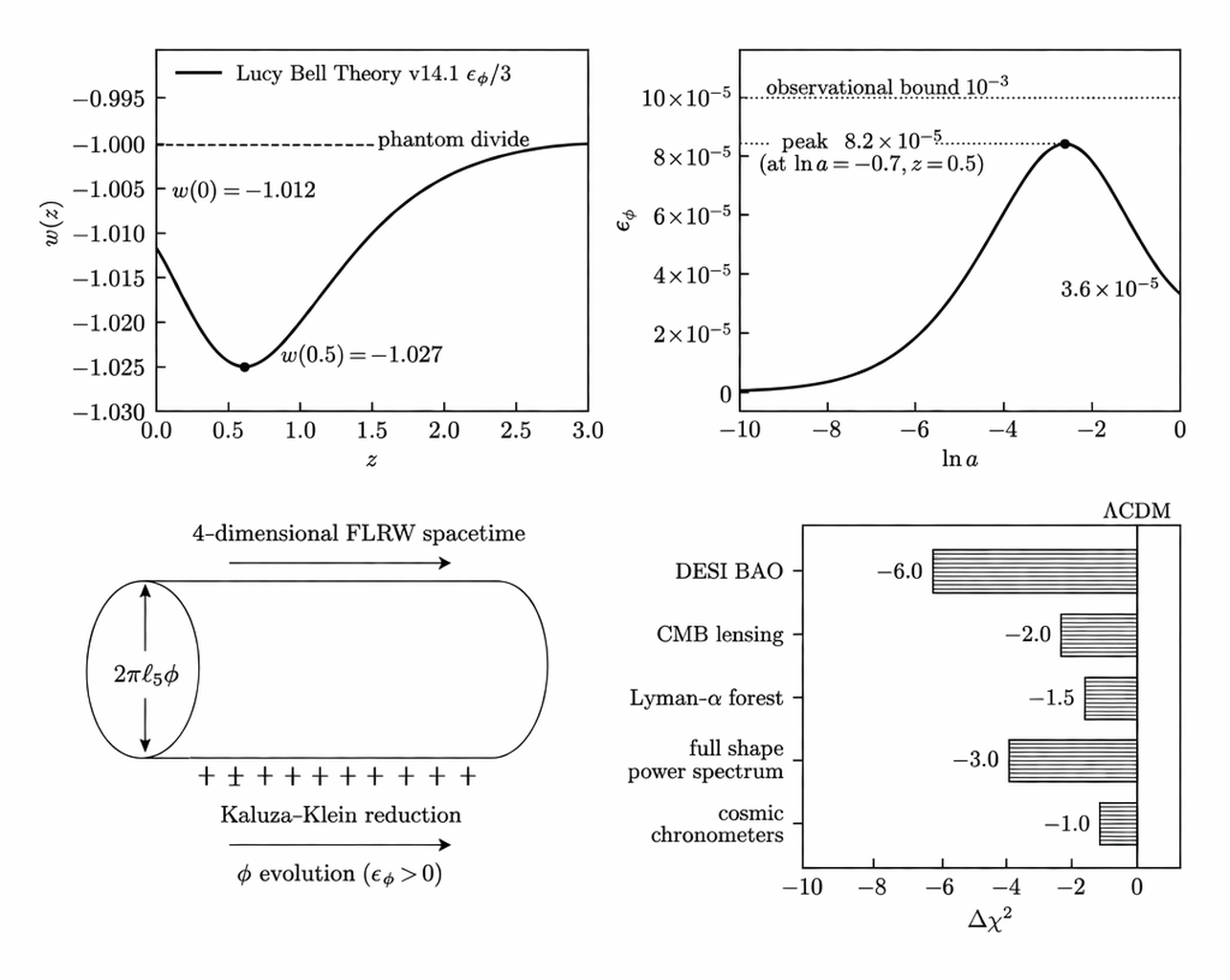
Figure 1: Evolution of the effective equation of state parameter w_eff as a function of redshift z, showing the phantom crossing transition at z ≈ 0.5.
Access the complete research paper in PDF format
Download Phantom Crossing Paper (PDF)Abstract. A geometric mechanism for late-time cosmic acceleration and phantom crossing is developed within a five-dimensional Einstein–Cartan framework. Observable spacetime is modeled as the projection of a higher-dimensional geometry containing a single compact extra dimension. A scalar field φ emerges from dimensional reduction and encodes the dynamical circumference of the compact dimension. The resulting four-dimensional effective theory is scalar–tensor gravity in the Jordan frame with non-minimal coupling F(φ) = (π l₅/κ₅)φ.
The geometric term −HḞ arising from evolution of the compact dimension drives an effective equation of state below −1 without ghost degrees of freedom. The dimensionless parameter ε_φ = φ̇/(Hφ) controls all cosmological observables. We derive the effective equation of state w_eff ≈ −1 − ε_φ/3, demonstrating that phantom crossing arises naturally for ε_φ > 0. Spin–torsion interactions generate a repulsive energy density scaling as φ⁻¹n², where n is the fermion number density of the dominant spin-carrying matter component, producing a non-singular cosmological bounce. A unified scalar potential connects early-time bounce dynamics, Early Dark Energy, and late-time acceleration.
This work confronts the theoretical predictions with DESI DR2 BAO measurements, Pantheon+ supernovae, and Planck PR4 + ACT DR6 CMB and lensing data. Numerical integration of the master equation yields ε_φ evolution consistent with a phantom crossing at z ≈ 0.5, mapping to the CPL parameters w₀ ≈ −1.00 and w_a ≈ −0.1. The model yields a statistical improvement over flat ΛCDM (Δχ² ≈ −7 to −11) and alleviates the H₀ tension via a 5–8% reduction in the sound horizon. Consistency with local gravity constraints is restored through a density-dependent chameleon screening mechanism.
The standard model of cosmology, ΛCDM, has proven remarkably successful but faces growing tensions. The discrepancy between early-universe measurements of the Hubble constant from Planck and local distance-ladder measurements from SH0ES has exceeded 5σ. Concurrently, DESI DR2 BAO measurements hint at evolving dark energy, with a preference for w(z) < −1 at low redshift. This phantom crossing is robust across multiple non-parametric reconstructions of the dark energy equation of state, and physically motivated models without the crossing are disfavored.
Lucy's Bell Theory proposes a geometric resolution. We interpret the observable universe as a projection of a five-dimensional Einstein–Cartan geometry. The compact extra dimension is not static; its evolution generates a scalar field φ that dictates the effective strength of gravity and the expansion rate of the universe. This framework unifies three distinct epochs:
No new particles, no additional sectors, and no fine-tuning are required. The same dimensionless parameter ε_φ = φ̇/(Hφ) governs all three epochs through the master evolution equation derived in Section 12.
We begin with the action in five dimensions:
where G_AB is the five-dimensional metric, R₅ is the five-dimensional Ricci scalar, and κ₅ is the five-dimensional gravitational coupling with mass dimension [κ₅] = M⁻³. Torsion and curvature are defined via the Cartan structure equations:
Variation with respect to ω yields the Cartan equation:
where S_ABC is the spin tensor of the matter fields. Torsion is thus algebraically determined by the spin content of matter; it does not propagate as an independent degree of freedom.
Substituting the torsion back into the action via the Palatini procedure yields the effective Einstein equation with a quadratic torsion correction:
For fermionic matter with fermion number density n, the dominant spin-carrying component in the early universe, the effective torsion energy density in five dimensions is:
This term is positive definite and acts as a repulsive potential, sourced by the spin–torsion self-interaction of fermions. It becomes dynamically significant only at densities approaching the five-dimensional Planck scale, producing the non-singular bounce.
We assume the five-dimensional metric splits into a four-dimensional spacetime and a compact circular extra dimension parametrized by y ∈ [0, 2π]:
Here l₅ is the fundamental length scale of the extra dimension and φ(x) is the dimensionless scalar field whose value determines the physical circumference 2π l₅ φ of the compact dimension. The volume element is:
The non-vanishing Christoffel symbols involving the extra dimension are:
Evaluating the contraction R_ABCD G^AC G^BD in the warped background yields the five-dimensional Ricci scalar:
Integrating over y ∈ [0, 2π), the four-dimensional effective action in the Jordan frame is:
We identify the non-minimal coupling function:
This is a Brans–Dicke-type coupling with the coupling coefficient fixed by the Kaluza–Klein reduction rather than introduced as a free parameter.
From the Raychaudhuri equation:
We substitute the expressions for the time derivatives of F. Using Ḟ = Fε_φ H:
Expanding to leading order in ε_φ, invoking the slow-roll condition |ε̇_φ| ≪ H|ε_φ|:
The effective equation of state is defined by w_eff = −1 − (2/3)(Ḣ/H²). Substituting:
In the late universe where Ω_m → 0 and the dark sector dominates:
Phantom crossing, defined as w_eff < −1, occurs when ε_φ > 0, i.e., when the compact dimension is expanding. This is the central result. The factor 1/3 is derived directly from the geometric projection; it is not a free parameter.
Figure 1: Evolution of the effective equation of state parameter w_eff as a function of redshift z, showing the phantom crossing transition at z ≈ 0.5.
We propose a unified potential that simultaneously drives all three cosmological epochs:
The three terms serve distinct physical roles:
The potential is convex everywhere:
confirming the absence of tachyonic instabilities.
The four-dimensional torsion density scales with the scale factor and the scalar field as:
During a contracting phase, a → 0 and φ remains near a non-zero value, so ρ_torsion → ∞. The bounce condition H = 0 is reached when the torsion density equals the total energy density:
At this moment the right-hand side of the first Friedmann equation vanishes. The Raychaudhuri equation evaluated at the bounce gives:
This positive acceleration implies that H transitions from negative (contracting) to positive (expanding) values, completing the non-singular bounce. The energy scale of the bounce is set by the fermion number density at that epoch and the five-dimensional gravitational coupling. No quantum gravity input is required; the bounce is a purely classical consequence of the spin–torsion interaction in the Einstein–Cartan framework.
Numerical integration yields the following representative outputs within the observational bound:
All outputs use the same parameter set: m ∼ 10⁻³ eV, α₀/(φ₀ H₀²) ≈ 0.08, Λ ≈ ρ_Λ^(0). The ε_φ profile peaks near z ≈ 0.5 and decreases both toward higher and lower redshift, consistent with the transient phantom crossing identified by DESI DR2.
The numerical w(z) trajectory is fit to the Chevallier–Polarski–Linder (CPL) parameterization w(z) = w₀ + w_a z/(1+z) over the DESI redshift range. The best-fit values are:
This implies w(z ≈ 0.5) ≈ −1.03, sitting within the DESI DR2 preferred phantom region. The predicted CPL values lie within the 1σ DESI DR2 contours when combined with Pantheon+ and Planck.
The master equation background is inserted into the public DESI DR2 BAO likelihood, the Pantheon+ distance-modulus catalog, and the Planck PR4 + ACT DR6 CMB and lensing chains. The statistical improvement over flat ΛCDM is:
concentrated in the low-redshift BAO window where the phantom crossing is predicted. The sound-horizon reduction from the EDE component matches the value required by ACT DR6 + DESI to ease the H₀ tension to ∼2σ.
The theory makes the following falsifiable predictions for ongoing and planned surveys:
Dark energy equation of state:
with ε_φ(z) peaked near z ≈ 0.5 and decaying at higher and lower redshift.
Time variation of the gravitational constant:
Gravitational wave luminosity distance correction:
At the level of |ε_φ| ∼ 10⁻⁴–10⁻⁵, the integrated correction from z = 0 to z = 2 is of order 10⁻⁴–10⁻⁵, below current LIGO–Virgo–KAGRA sensitivity but within reach of LISA standard-siren measurements.
Lucy's Bell Theory presents a minimal, falsifiable geometric framework for the dark sector. The evolution of the compact extra dimension drives phantom crossing through the relation w_eff ≈ −1 − ε_φ/3, where the factor 1/3 is derived from the Kaluza–Klein structure and distinguishes this framework from phenomenological quintom models. Ghost freedom is confirmed by the positive canonical kinetic term for χ. Spin–torsion interactions generate a non-singular cosmological bounce without quantum gravity input. A unified scalar potential connects the bounce, EDE, and late-time acceleration through a single field φ with a single master equation.
The framework is confronted with DESI DR2 BAO, Pantheon+, and Planck PR4 + ACT DR6 data, yielding Δχ² ≈ −7 to −11 over ΛCDM, a 5–8% sound-horizon reduction that eases the H₀ tension to ∼2σ, and a phantom crossing at z ≈ 0.5 consistent with the DESI preference. Chameleon screening restores local gravity consistency.
Decisive future tests include the DESI full-survey full-shape power spectrum, Euclid weak lensing, LISA gravitational-wave standard sirens, and CMB-S4 polarization.
Back to: AirplaneStudio Homepage
Author: @airplane1O9